Wooden Toys Watercolor Illustrations: A Brand Designer’s Review for Local Business Use
First Impressions: Soft, Playful, and Inviting
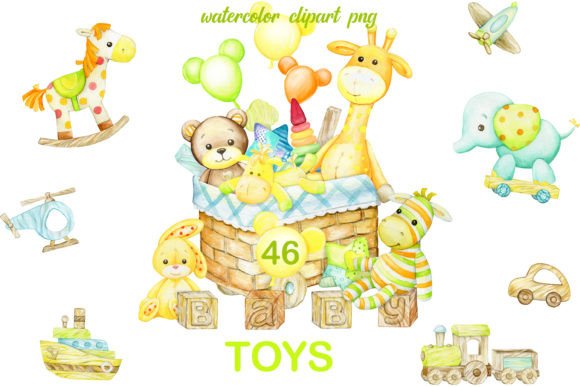
As a brand designer who frequently works with local businesses—especially in the children’s product space and boutique retail—the first thing I noticed about the Wooden Toys, Watercolor Digital Clipart is its gentle, hand-painted charm. The illustrations feel authentically handmade, with soft edges, natural color washes, and a slight texture that suggests watercolor brushwork. This style immediately communicates warmth, creativity, and approachability—ideal for brands aiming to feel family-friendly, artisanal, or locally rooted.
Brand Personality and Target Fit
This graphic design asset feels especially suited for small businesses that want to project a sense of innocence, craftsmanship, and playfulness. Think of a local toy shop, a Montessori-inspired children’s clothing brand, or a boutique that sells handmade wooden toys. It could also work for seasonal packaging, like holiday-themed product lines or limited-edition gift boxes.
The mood is definitely nostalgic and whimsical, so it would align well with brands that want to evoke a sense of childhood wonder or natural simplicity. It’s not overtly modern or minimalist, but rather soft, decorative, and emotionally engaging—perfect for connecting with parents, educators, and local shoppers.
Practical Use Cases for Local Branding
Let’s get real: I recently worked with a small children’s book publisher looking to rebrand their packaging and promotional materials. We used a similar watercolor clipart set to create a custom brand identity. Here’s how the Wooden Toys, Watercolor Digital Clipart could be applied in real branding and packaging projects:
- Product packaging – Ideal for wooden toy boxes, puzzle packaging, or baby product labels.
- Label design – Works beautifully on hang tags, thank-you cards, or printed inserts inside toy kits.
- Social media visuals – Perfect for Instagram carousels, Pinterest boards, or seasonal posts featuring toy collections.
- Printed marketing materials – Flyers, brochures, and business cards for toy stores, craft workshops, or educational toy brands.
- Website banners and hero images – Adds a soft, inviting visual tone to landing pages or product galleries.
How It Elevates Business Presentation
One of the biggest challenges for small businesses is standing out on shelves or in digital feeds. The Wooden Toys, Watercolor Digital Clipart helps by adding a unique, artisanal touch that consumers often associate with quality and care. Here’s how it can support a more professional brand presence:
- Stronger first impression – Visually engaging illustrations catch the eye before the product copy does.
- Better product recognition – Consistent use of clipart across packaging builds brand recall.
- Clearer visual hierarchy – Can be used as a decorative anchor that guides the viewer’s eye through the design.
- More consistent brand identity – When used across print and digital, it reinforces a cohesive visual language.
- Improved customer trust – The handmade aesthetic appeals to buyers who value authenticity and small-batch production.
Where It Works Best
This design asset shines when used as a supporting visual element rather than a dominant layout feature. Here are the top applications where it truly adds value:
- Product labels – Especially for toy brands or handmade goods that need a soft, friendly visual tone.
- Packaging accents – Works well as a border, corner detail, or background texture.
- Hero graphics – Perfect for landing pages or promotional banners on Etsy shops or Shopify stores.
- Seasonal packaging – Easily adapted for holiday boxes, Easter baskets, or summer toy kits.
- Social media campaign graphics – Adds a consistent brand style to content posted across platforms.
Where to Use It Carefully
While this clipart set is visually appealing, it’s not a one-size-fits-all solution. Here are a few situations where you should be cautious or consider alternatives:
- Formal corporate branding – Not suited for law firms, financial services, or high-end corporate identities.
- Very small labels – The detail may get lost on tiny packaging like stickers or toy tags.
- Crowded product packaging – Can compete with other design elements if not spaced properly.
- Ingredient-heavy layouts – Not ideal for food packaging that needs to showcase long lists or certifications.
- Low-contrast backgrounds – May fade into light or busy backgrounds if not layered properly.
Designer Notes: Practical Testing and Setup
Before rolling this asset into a client’s brand identity or packaging design, here are a few practical checks I always perform:
- Test on real packaging mockups – See how it looks on a box, label, or tag in a 3D mockup.
- Check black and white usage – Some watercolor textures lose impact when converted to grayscale.
- Preview on small labels – Ensure clarity and legibility when scaled down.
- Test with brand colors – Confirm it complements your brand palette and doesn’t clash.
- Compare with competitor packaging – Avoid visual overlaps that could confuse your audience.
- Check print quality – Look for pixelation or color shifts when printed on different materials.
- Review PNG transparency – Make sure the background is clean and easy to layer over other designs.
- Inspect SVG or vector editability – If available, test how easy it is to adjust colors or resize without distortion.
- Test with different fonts – See how it pairs with serif, sans-serif, script, and display fonts for brand consistency.
- Confirm commercial licensing – Always double-check that the clipart is cleared for use in product packaging and branding for resale.
Final Thoughts: A Versatile Asset for Heartfelt Branding
If you're a local business owner, packaging designer, or brand strategist working with handmade toy brands, educational products, or seasonal goods, the Wooden Toys, Watercolor Digital Clipart can be a valuable addition to your design toolkit. It brings a sense of warmth, personality, and artistic flair that’s hard to replicate with stock graphics. When used thoughtfully, it can elevate your brand identity, packaging design, and customer experience—making your product feel more personal, more trustworthy, and more memorable.